Livelox Pick of the Week; #5


Livelox Pick of the Week; #5

Of the events that took place over the weekend of April 20-21, 2024, I would recommend watching two particular events.

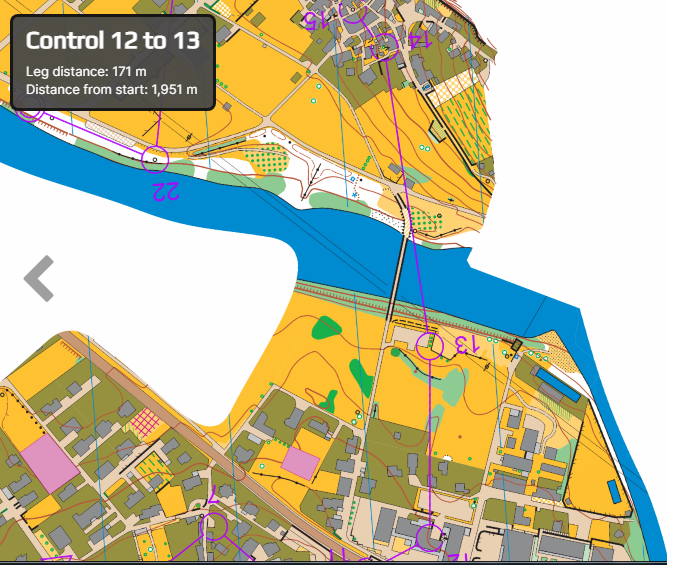
1. Sprint in Switzerland: Organising club is ASTI Ticino

The natinal level spront  event took place in a picturesque village characterized by small houses, narrow streets, fences, and steps. The course offered a dynamic shift in technical difficulty, ranging from intense orienteering to simpler legs in open terrain. While the Elite courses did not feature overly challenging route choices, victory hinged on precision in navigating on  legs with multi route variations. 


2. Long Distance of the Polish Club Championships: 

Organising club is MKS Paulinum Jelenia Góra

This event exemplifies how a truly "classic" long-distance course can be created on a relatively small map (about 5 km2), adhering to all the conventions of the genre. Long legs with numerous route variations were interspersed with shorter, technically demanding legs. The entire course demanded constant attentive navigation, presenting no easy sections even on roads and trails. The diverse vegetation, mountainous terrain, and superb course design resulted in a highly commendable course.


Aleksandr Alekseyonok, April 22, 2024

Subscribe to this Facebook group Orienteering Technical trainings not to miss interesting analysis, news and other useful information related to technical training.


Comments

Popular posts from this blog

  Case Study #4 Case: You ran onto a narrow ride slightly below its end and are unsure which of several similar rides you are on.   Solution: In this situation, the relief profile can assist us. Even if the rides themselves appear similar, the relief profile along each ride differs , providing valuable clues for accurate positioning. This approach is discussed in Chapter 3 ( Using All the Indicators for Confident Positioning ) of the book Planning Reliable Routes . It demonstrates that relief can be used not only when we are uncertain about our current location , but also proactively during route planning . By analysing the map in advance, we can identify segments where linear features intersect with relief forms , creating distinct and easily recognisable points. These can serve as reliable positioning features . Additionally, flat areas and transitions between slopes and level terrain can also support effective location verification. (Example taken from my book Plann...

New o-book is coming this fall!

  New O-Book Coming This Fall! Confident Orienteering: A Systematic Approach to Minimising Errors Book 1: Fundamentals was released in October 2023 and has already been translated into seven languages , alongside the original English edition. With 8 chapters and 140 pages, it introduced the core concepts of the author's navigation system — and I’m still amazed at how warmly it was received by orienteers around the world. 🌍 As we continued working on the next part of this practical guide, it became clear that the project had grown into something much bigger — not least because of the sheer number of examples and illustrations included throughout (around 250 in total!). To make the material easier to absorb, we’re now leaning towards splitting it into two volumes , each with its own clear focus. This isn’t a final decision yet, and even the titles below are working titles — but right now, this structure feels like the most reader-friendly option: 📖 Book 2 (working title...

The Road to JWOC 2026, #2 (Long Distance)

  The Road to JWOC 2026, #2 (Long Distance) Short  Leg 1: what to do In the previous post in this series, we identified—based on the terrain characteristics and extensive experience from many previous competitions in this area—that a short first leg with complex navigation is highly likely. In this post, we focus on what exactly to do in such a situation. Let us begin by explaining why we are specifically discussing short first legs . If the first leg is longer , it will most likely intersect paths , as this terrain is full of paths of different types . In that case, an athlete has several safety options : – choosing a detour along paths; – or navigating less precisely on a bearing , deliberately aiming off early to hit a path and then restoring exact position while running along it. https://www.livelox.com/Viewer/JVM-test-lang/D20?classId=392774&live=false&tab=player In such scenarios, the initial nervousness and uncertainty at the beginning of the co...